

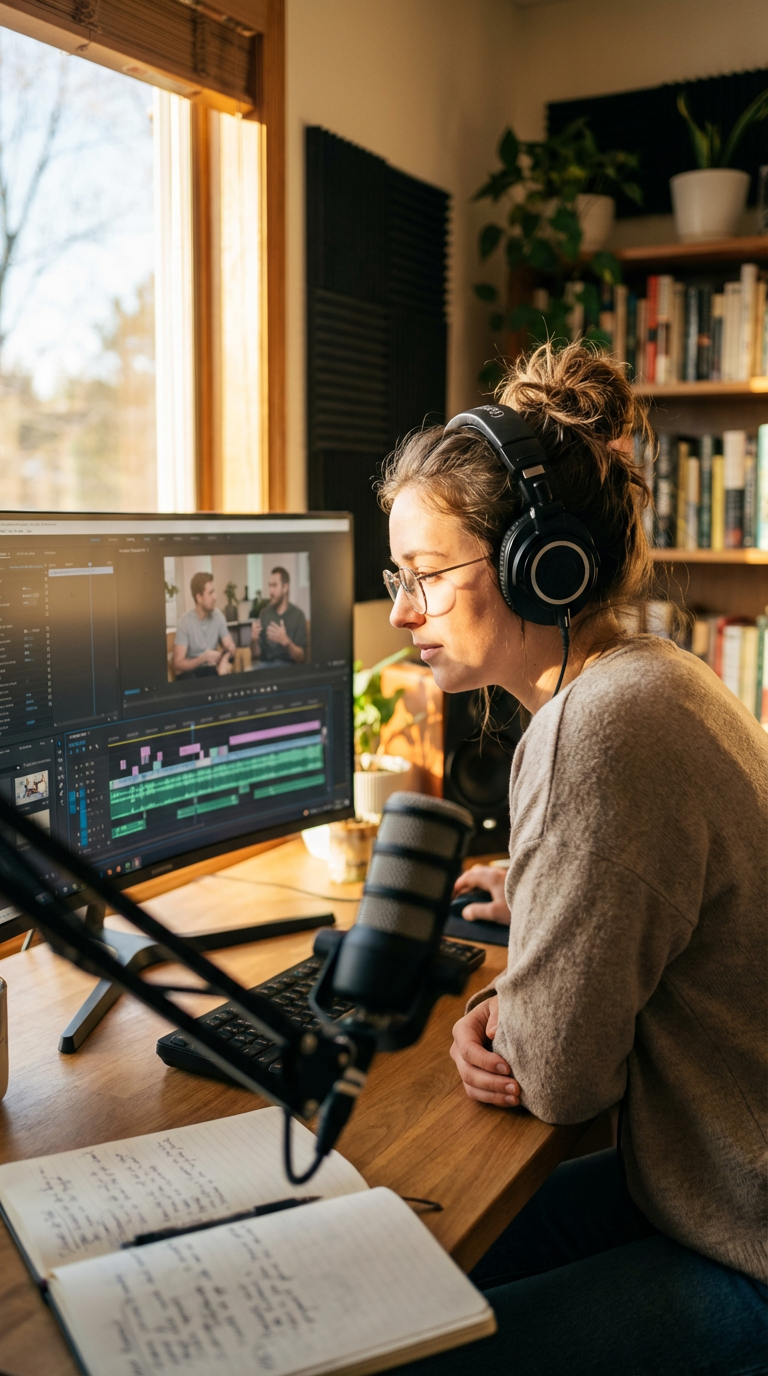

Most podcasters leave half their audience on the table. You record an episode, publish to Apple and Spotify, and call it done. Meanwhile, YouTube has quietly become one of the largest podcast consumption platforms in the world. If you’re not repurposing podcast content for YouTube, you’re missing a strategic growth channel that compounds over time.
The question isn’t whether to repurpose your podcast for YouTube. It’s how to do it in a way that builds authority, increases discoverability, and doesn’t add another burden to your calendar. Therefore, understanding the right approach matters more than speed alone.
Why Repurposing Podcast Content for YouTube Matters
YouTube isn’t just a video platform anymore. It’s a search engine, a discovery mechanism, and a credibility signal. When someone searches your name or your company, your YouTube presence shapes their perception of your authority.
For established brands doing seven or eight figures annually, this isn’t about chasing views. It’s about establishing presence where your buyers are already looking. YouTube videos rank in Google search results. Podcast episodes uploaded to Apple do not.
Specifically, YouTube’s algorithm rewards consistent publishing and visual engagement. A well-executed video podcast strategy creates compounding visibility. Each episode becomes a search-optimized asset that works for you long after publication.
In addition, the platform offers monetization opportunities that traditional podcast platforms don’t. Ad revenue, memberships, and sponsorship integrations become possible when your content lives on YouTube. However, these benefits only materialize when execution meets YouTube’s standards for engagement and quality.
The Core Challenge With Podcast to YouTube Conversion
Audio-first content doesn’t naturally translate to visual platforms. A static image with a waveform doesn’t engage viewers the way native YouTube content does. The algorithm prioritizes watch time and engagement. Static uploads fail on both metrics.
Most podcasters make one of two mistakes. They either upload raw audio with no visual strategy, or they over-invest in complex video production that isn’t sustainable. Neither approach builds the consistency required for YouTube growth.
The right strategy sits between those extremes. It combines automation where appropriate with intentional production choices that signal professionalism and brand quality. As a result, your content performs well algorithmically while reinforcing your market position.
Understanding Your Options to Repurpose Podcast Content for YouTube
There are multiple technical paths for getting podcast content onto YouTube. Each comes with trade-offs in control, engagement, and time investment. Let’s examine what actually works for established brands.
Native YouTube Podcast Upload
YouTube Studio allows direct podcast uploads with full control over presentation. You create a podcast series, add episodes manually, and mark the playlist as a podcast for inclusion in YouTube’s dedicated podcast directory.
This method gives you maximum control over titles, descriptions, thumbnails, and metadata. It also allows you to optimize each episode for search before publication. For brands serious about YouTube channel growth, this approach delivers the best long-term results.
The downside is time investment. Each episode requires manual upload and optimization. For busy founders, this becomes another task competing for attention. However, when handled by a dedicated team or production partner, native uploads outperform every automated alternative.
RSS Feed Syndication
YouTube allows you to import your podcast RSS feed directly. The platform automatically pulls episodes, generates static videos using your cover art, and creates a playlist. It’s the fastest path to distribution.
The problem is engagement. Static image videos with no visual movement generate minimal watch time. YouTube’s algorithm deprioritizes this content because viewers don’t stick around. You get presence but not performance.
RSS syndication works as a foundation if you’ve already built an audience elsewhere. For brands starting fresh on YouTube or trying to grow their channel, it leaves opportunity on the table. Therefore, consider it a baseline rather than a complete strategy.
Audiogram and Visual Enhancement Tools
Audiogram generators convert audio into videos with animated waveforms, captions, and branded visual elements. These tools provide more engagement than static images while maintaining production efficiency.
You upload your audio, customize fonts and colors to match your brand, and export a video file. The result includes dynamic captions, sound visualization, and custom imagery. Platforms like Headliner and similar services automate much of this process.
Audiograms perform better than static uploads because they give viewers something to watch. Captions improve accessibility and allow consumption without sound. However, they still lack the human element that YouTube’s algorithm increasingly favors.
Full Video Podcast Production
Recording video alongside audio creates native YouTube content from the start. You capture hosts and guests on camera, edit for visual engagement, and publish episodes that compete with purpose-built YouTube content.
This approach delivers the highest engagement and algorithmic performance. YouTube’s data shows that faces outperform waveforms significantly. Visual content with multiple camera angles, B-roll, and professional editing keeps viewers watching longer.
The investment is higher, but so is the return. Video podcasts position your brand as established and professional. They build personal connection with your audience in ways audio alone cannot. For brands using content as a primary growth channel, full video production becomes inevitable.
What the Algorithm Actually Rewards
YouTube prioritizes content that keeps viewers on the platform. Watch time matters more than views. Engagement signals like comments, likes, and shares tell the algorithm your content resonates.
Static audio uploads fail these tests. Viewers click away quickly because there’s nothing to watch. The algorithm learns your content doesn’t retain attention and stops recommending it. Your reach plateaus regardless of content quality.
In contrast, visual content with faces, movement, and dynamic elements holds attention. Even simple setups with good framing and lighting outperform elaborate audiograms. The presence of human faces triggers deeper engagement psychologically and algorithmically.
Importantly, YouTube now has a dedicated podcast section at youtube.com/podcasts. To appear there, your playlist must be marked as a podcast in YouTube Studio. However, getting listed doesn’t guarantee visibility. Performance still determines reach.
The SEO Advantage of YouTube Podcast Content
YouTube is the second-largest search engine after Google. More importantly, Google owns YouTube and prioritizes its videos in search results. When you publish podcast episodes to YouTube with proper optimization, you create search-visible assets.
Each episode becomes a landing page. The title, description, and transcript provide keyword-rich content that Google indexes. Someone searching for topics you cover can discover your content through search rather than requiring an existing audience.
This compounds over time. A library of optimized episodes creates multiple entry points to your brand. As a result, your authority builds across search results, not just within podcast directories. This visibility matters for B2B brands where buyers research extensively before engaging.
Specifically, optimize episode titles for search intent, not just clever phrasing. Write descriptions that include relevant keywords naturally. Upload transcripts as subtitles to provide searchable text. These steps take minutes but multiply your content’s discoverability.
What Most Brands Get Wrong
The most common mistake is treating YouTube as a distribution afterthought. You record for audio, then try to retrofit video later. This produces mediocre results because the content wasn’t designed for visual consumption.
Another error is inconsistency. You upload a few episodes, see minimal traction, and abandon the channel. YouTube’s algorithm rewards consistent publishing. Momentum builds over months, not days. Stopping early means you never reach the inflection point where growth accelerates.
Many brands also neglect optimization. They upload content but don’t craft compelling thumbnails, write searchable titles, or structure descriptions for discovery. On YouTube, metadata matters as much as content quality. Poor optimization means great content goes unseen.
Finally, there’s the DIY trap. Founders try to manage podcast production, video editing, thumbnail design, and YouTube optimization themselves. It’s technically possible but strategically questionable. Your time has higher-value uses than learning YouTube’s ever-changing algorithm.
What Right Execution Looks Like
Effective podcast to YouTube repurposing starts with production planning. You decide upfront whether to record video or enhance audio post-production. This choice shapes your entire workflow and output quality.
For brands committed to YouTube growth, recording video from the start makes sense. You capture content once and distribute across both audio and video platforms. This requires more sophisticated production but eliminates the need for separate video creation later.
The production itself should be white-glove. Professional lighting, audio, and framing signal credibility. Your audience judges production quality within seconds. Poor execution undermines your message regardless of content value.
After recording, optimization becomes critical. Each episode needs a custom thumbnail designed for click-through. Titles must balance searchability with curiosity. Descriptions should include timestamps, links, and keyword-rich summaries. This work determines whether your content gets discovered.
Consistency matters more than perfection. Publishing weekly builds momentum the algorithm rewards. Gaps in your schedule reset that momentum. Therefore, sustainable systems matter more than heroic individual efforts.
The Role of Professional Production
Most established brands eventually reach the same conclusion. Managing podcast and YouTube production internally dilutes focus from core business activities. The skills required span audio engineering, video editing, graphic design, and platform-specific optimization.
Hiring full-time for these roles is expensive and often unnecessary. Contractors provide flexibility but require ongoing management. Neither approach feels effortless, which is what time-constrained founders actually need.
Professional production partners handle the entire process from recording through publication. You show up for recording sessions, and finished content appears on schedule across platforms. This model makes consistent, high-quality publishing sustainable without internal overhead.
Specifically, the right partner understands both podcast production and YouTube strategy. They optimize for each platform’s unique requirements rather than treating YouTube as a simple republishing destination. This expertise directly impacts your channel’s growth trajectory.
When evaluating production support, look for teams that demonstrate strategic thinking beyond technical execution. 320 Creative’s services exemplify this approach, combining production excellence with platform-specific optimization that drives measurable channel growth.
Measuring What Matters
YouTube provides extensive analytics, but not all metrics matter equally. Views provide surface-level feedback. Watch time reveals whether content holds attention. Click-through rate on thumbnails shows whether your packaging works.
For B2B brands, engagement matters more than scale. A thousand views from your target audience creates more value than ten thousand random viewers. Therefore, track subscriber growth from your industry and comments that indicate genuine interest.
Long-term, monitor how YouTube content contributes to broader business goals. Does it generate inbound inquiries? Do prospects mention finding you through YouTube? Does your channel establish credibility that shortens sales cycles? These outcomes justify the investment more than vanity metrics.
In addition, watch for compounding effects. Your library of content becomes more valuable over time as episodes reference each other and create multiple discovery paths. This compounding makes early investment in quality production and optimization worthwhile.
The Strategic Case for Starting Now
YouTube’s podcast functionality continues evolving. Early adopters who build libraries of optimized content establish authority that becomes harder to challenge as competition increases. Starting now means you’re building momentum while others are still deciding.
The technical barriers are lower than ever. Tools exist for every approach from simple RSS syndication to full video production. The real barrier is strategic clarity and consistent execution. Most brands have the resources, they lack the system.
For established companies already producing podcast content, repurposing for YouTube represents leverage. You’re already creating the core asset. Extending it to YouTube multiplies its impact without proportionally increasing effort, especially with proper production support.
Importantly, your competitors are likely making the mistakes outlined earlier. They’re uploading inconsistently, neglecting optimization, or treating YouTube as an afterthought. Doing it properly creates immediate differentiation in your market.
Building Sustainable Content Leverage
The goal isn’t just presence on another platform. It’s creating content assets that work continuously to build your brand’s authority and reach. When you repurpose podcast content for YouTube correctly, each episode becomes a permanent piece of your digital presence.
This content appears in search results, gets recommended to new audiences, and provides evergreen value. Unlike social media posts that disappear from feeds within hours, YouTube videos maintain visibility indefinitely. The work you do today continues generating returns for years.
This leverage is why established brands increasingly view podcast and YouTube content as core marketing infrastructure rather than experimental channels. The compounding returns justify significant investment in quality production and optimization.
The brands that win are those that commit to consistent, high-quality publishing over time. They recognize this isn’t a quick tactic but a strategic channel that builds authority predictably. They also recognize that trying to manage this internally often leads to inconsistency that undermines results.
Making the Transition to YouTube
If you’re currently podcasting without YouTube presence, the transition is straightforward in concept. You need to decide your production approach, establish optimization standards, and commit to consistent publishing.
Start by auditing your current podcast production. Are you already recording video? If so, you’re most of the way there. If not, you need to decide whether to add video recording or enhance audio with visual elements post-production.
Next, determine your optimization capacity. Can someone on your team handle thumbnail design, metadata optimization, and platform-specific best practices? If not, factor in production support from the start rather than attempting DIY and burning out.
Set realistic publishing expectations. Weekly is ideal for algorithm momentum, but bi-weekly consistency beats sporadic weekly attempts. Choose a schedule you can maintain with your resources and support structure.
Finally, measure and refine. YouTube provides clear feedback on what works. Watch your analytics, note which episodes perform well, and adjust your approach accordingly. This iterative improvement compounds over time.
Conclusion
Learning how to repurpose podcast content for YouTube is about understanding the strategic value of multi-platform presence. YouTube offers search visibility, algorithmic discovery, and authority-building that audio-only platforms cannot match.
The technical execution matters less than strategic consistency. Whether you choose video production, enhanced audiograms, or native uploads, the real differentiator is sustained optimization and publishing over time. This requires systems and support that make excellence effortless rather than heroic.
For established brands, the question isn’t whether your podcast belongs on YouTube. It’s whether you’ll execute properly or leave that growth opportunity to competitors who take it seriously. The brands building authority on YouTube today are those that recognized content as infrastructure and invested accordingly.
If you’re ready to extend your podcast to YouTube without adding overhead to your calendar, 320 Creative handles the complete process from video production through optimization and publishing. Your role is showing up for recording. Everything else happens without your involvement. The result is consistent, professional content that builds your authority across the platforms that matter most.